If you work a desk job, you probably spend eight or more hours a day sitting. And even if you exercise regularly, that might not be enough to undo the damage. A 2024 study published in JAMA Network Open found that people who predominantly sit at work are 16% more likely to die from any cause and 34% more likely to die from cardiovascular disease than those who don't. The good news: you don't need to quit your job. You need a smarter strategy for moving throughout the day.
The Real Cost of Sitting All Day
The research on prolonged sitting has grown more alarming with every passing year. An analysis of nearly 90,000 participants from the UK Biobank found that more than roughly 10.5 hours of sedentary behavior per day was significantly linked with heart failure, atrial fibrillation, and cardiovascular death — even among people who met the recommended exercise guidelines.
A study published by the University of California found that sitting for 8 or more hours per day increases cholesterol ratios and BMI even in physically active young adults. And a 2026 study reported that each extra hour of prolonged sedentary behavior is associated with a 9% higher risk of cancer death.
Here's what the research tells us about the cumulative risks:
| Risk Factor | Finding | Source |
|---|---|---|
| All-cause mortality | +16% for desk workers who predominantly sit | JAMA Network Open (2024) |
| Cardiovascular mortality | +34% for predominantly seated workers | JAMA Network Open (2024) |
| Heart failure | Significant increase above 10.5 hrs/day sedentary | ACC / UK Biobank |
| Cancer death | +9% per extra hour of prolonged sitting | ScienceDaily (2026) |
| Cholesterol and BMI | Elevated even in active adults sitting 8+ hrs | UC Study (PLOS One) |
| Musculoskeletal pain | Common among desk workers without movement breaks | PMC (2022) |
The key takeaway: exercise alone doesn't fully cancel out prolonged sitting. You need both — regular workouts and frequent movement throughout the day.
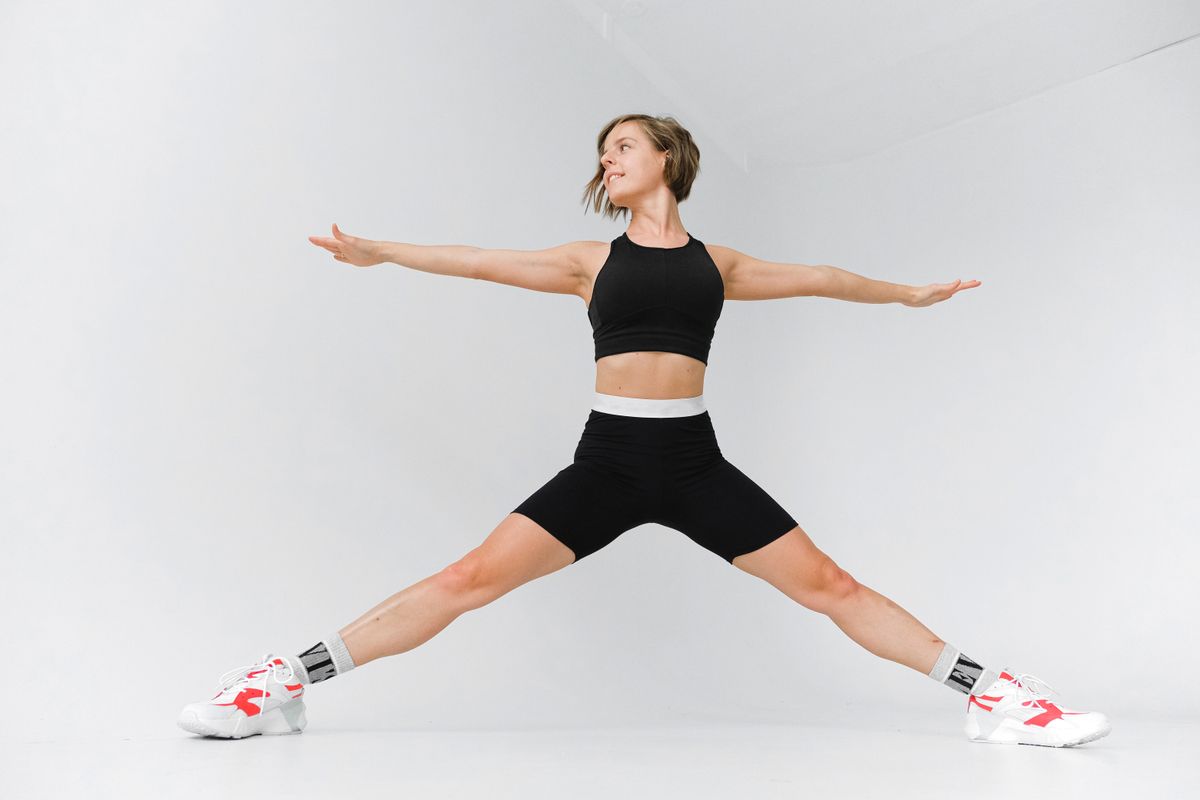 Woman stretching arms and legs during a break from work
Free on iOS
TRAIN SMARTER
Build custom HIIT, Tabata, AMRAP, EMOM and Circuit workouts. Precision timer, streak tracking and analytics — free on iOS.
How Much Exercise Offsets a Full Day of Sitting?
The most cited study on this question comes from a Lancet meta-analysis of over one million people. It found that 60 to 75 minutes of moderate physical activity per day — brisk walking, cycling, or similar — can eliminate the increased death risk associated with 8 hours of daily sitting.
That's more than double the World Health Organization's baseline recommendation of 150 minutes per week (about 21 minutes per day). But before that number feels discouraging, consider this: a separate study published by Harvard Health found that even 20 minutes of moderate-to-vigorous exercise per day significantly reduces the mortality risk from prolonged sitting. You don't need to hit the full hour to benefit — every minute counts.
The more practical approach is a two-layer strategy:
- A daily workout of 20 to 40 minutes (HIIT, strength training, or a brisk walk)
- Movement breaks throughout the day that interrupt long bouts of sitting
Neither one alone is enough. Both together are powerful.
The 5-Minute Walking Fix
If there's one single habit that desk workers should adopt, it's this: a 5-minute light walk every 30 minutes.
Researchers at Columbia University tested five different break patterns during prolonged sitting and found that walking for 5 minutes every half hour produced the best results:
- Blood sugar spikes after eating dropped by nearly 60%
- Blood pressure decreased by 4 to 5 points
- Fatigue dropped significantly compared to uninterrupted sitting
- Mood and cognitive performance improved
Even shorter breaks helped. Walking for just 1 minute every 30 minutes still reduced blood sugar spikes by 22%. But the 5-minute interval was the clear winner for overall health impact.
Importantly, standing breaks without walking did not reduce blood sugar or insulin levels in the same study. If you have a standing desk, that's a good start — but it's not a substitute for actual movement.
 Office worker walking up stairs while talking on the phone
Movement Snacks for Desk Workers
Movement snacks — short bursts of activity lasting 1 to 5 minutes — are one of the most effective tools for counteracting prolonged sitting. A systematic review of 26 studies published in Healthcare found they consistently improved glucose regulation, reduced blood pressure, preserved blood flow, and enhanced cardiorespiratory fitness.
Here are movement snacks designed specifically for desk workers:
Every 30 Minutes (Pick One)
- Walk to the kitchen and back, take the long route
- 10 bodyweight squats at your desk
- 20 calf raises while standing
- March in place for 60 seconds
Every 2 Hours (Pick One)
- 1-minute wall sit
- 10 push-ups against your desk
- 30-second plank
- 20 reverse lunges (10 each leg)
Desk-Friendly Stretches
- Chest opener: Clasp hands behind your back, squeeze shoulder blades together, hold for 15 seconds
- Seated spinal twist: Turn your torso to one side, hold the back of your chair, hold 15 seconds each side
- Hip flexor stretch: Stand up, step one foot back into a lunge, push hips forward, hold 20 seconds each side
- Neck rolls: Slowly roll your head in a full circle, 5 times each direction
A 12-week study in the Journal of Occupational Medicine and Toxicology found that just 10 minutes of stretching twice per week significantly improved physical functioning, reduced bodily pain, and enhanced mental health scores in office workers.
Free on iOS
TRAIN SMARTER
Build custom HIIT, Tabata, AMRAP, EMOM and Circuit workouts. Precision timer, streak tracking and analytics — free on iOS.
A Desk Worker's Daily Movement Plan
You don't need to overhaul your schedule. You need a system that layers movement into the workday you already have.
| Time | Action | Duration |
|---|---|---|
| 7:00 AM | Morning workout (HIIT, strength, or brisk walk) | 20–30 min |
| 9:00 AM | Desk stretches (chest opener, spinal twist, neck rolls) | 2–3 min |
| 9:30 AM | Walk to kitchen, refill water | 2 min |
| 10:00 AM | 10 bodyweight squats | 1 min |
| 10:30 AM | Walk break (hallway, stairs, or outside) | 5 min |
| 11:00 AM | Calf raises or marching in place | 1 min |
| 12:00 PM | Walk during lunch break | 10–15 min |
| 1:30 PM | Wall sit + push-ups against desk | 3 min |
| 2:00 PM | Walk break | 5 min |
| 3:00 PM | Hip flexor stretch + seated twist | 2 min |
| 3:30 PM | Walk break or stair climb | 5 min |
| 4:30 PM | Reverse lunges + planks | 3 min |
| 5:30 PM | End-of-day cool-down stretch | 5 min |
This plan adds up to roughly 65 to 85 minutes of movement spread across the day — enough to offset the health risks of prolonged sitting according to the Lancet meta-analysis, without ever needing a gym.
Building the Habit
The biggest challenge isn't knowing what to do — it's remembering to do it. Research on exercise snacks highlights that accessibility and convenience are what make these breaks stick. Here are strategies that work:
Set a recurring timer. A 30-minute alarm on your phone or a Pomodoro timer is the simplest trigger. When it rings, stand up and move for 1 to 5 minutes.
Stack movement onto existing habits. Every time you refill your water, do 10 squats. Every time you finish a meeting, stretch for 60 seconds. Every time you go to the bathroom, take the long route.
Use walking meetings. Any call where you don't need to share your screen is a walking meeting. Take your phone, put in earbuds, and walk while you talk.
Keep it visible. A resistance band on your chair, a yoga mat next to your desk, or a pull-up bar in your doorway — visual cues make movement the default, not the exception.
 People walking in a modern office hallway
Track Your Desk Job Fitness With Hiitify
Hiitify helps you turn movement breaks into a trackable fitness habit. Set up quick interval timers for desk-friendly circuits — a 5-minute EMOM of squats and push-ups, a Tabata round of bodyweight exercises, or your own custom routine. Track your daily workout streaks so those short sessions between meetings add up to real, measurable progress over time.
Free on iOS
TRAIN SMARTER
Build custom HIIT, Tabata, AMRAP, EMOM and Circuit workouts. Precision timer, streak tracking and analytics — free on iOS.
Sources & Further Reading
Research
- Occupational Sitting Time Study (2024). Occupational Sitting Time, Leisure Physical Activity, and All-Cause and Cardiovascular Disease Mortality. JAMA Network Open. View on PMC
- Ekelund, U. et al. (2016). Does physical activity attenuate, or even eliminate, the detrimental association of sitting time with mortality? The Lancet. View on EurekAlert
- Duran, A. et al. (2023). Breaking Up Prolonged Sitting to Improve Cardiometabolic Risk. Columbia University Irving Medical Center. View on CUIMC
- Systematic Review (2025). Exercise Snacks as a Strategy to Interrupt Sedentary Behavior: Health Outcomes and Feasibility. Healthcare. View on PMC
- Office Work and Stretch Training Study (2020). A device-based stretch training for office workers resulted in increased range of motion. Journal of Occupational Medicine and Toxicology. View on PubMed
- American College of Cardiology (2024). Sitting Too Long Can Harm Heart Health, Even for Active People. View on ACC
Further Reading
- Walking Breaks Counter the Effects of Sitting — Harvard Health
- Counteracting Chronic Sitting — Stanford Lifestyle Medicine
- Sitting Risks: How Harmful Is Too Much Sitting? — Mayo Clinic
Image Credits
- Cover: A Person Sitting at a Desk Typing on a Laptop — Pexels
- Woman Stretching Arms and Legs — Pexels
- Office Worker Walking Up Stairs — Pexels
- People Walking in the Office — Pexels
All images free to use under the Pexels License.